


In our BIPOC sangha, many of you have been sharing the questions that are most alive for you right now. One that came through clearly and powerfully was this: How do we practice compassion toward those who cause harm, especially when that harm is directed at us or our communities? This is not a philosophical question. It is lived, embodied, and raw. It touches our histories of oppression, our ancestral grief, and the very real dangers we face today, like the brutal harms of immigration overreach, with ICE operating in our cities in ways that terrorize communities and separate families; staggering and widening wealth inequality; the measurable decline in young peoples’ learning, attention, and well-being driven by digital culture; escalating wars; the unraveling of systems that have held much of the world in relative peace since World War II; and the erosion of democracy, accountability, and shared norms as we see an accelerating slide toward authoritarianism.
In the Plum Village tradition, we are taught that compassion is the best protection. This teaching does not ask us to be passive, naïve, or self-sacrificing. It asks us to be wise, embodied, and rooted in reality.
In the Fifth of the Five Earth Touchings, we recite:
“I open my heart and send forth my energy of love and understanding to everyone who has made me suffer… I know now that these people have themselves undergone a lot of suffering and that their hearts are overloaded with pain, anger, and hatred… I see their suffering and do not want to hold any feelings of hatred or anger in myself toward them.”
This practice does not deny harm. It does not excuse violence, abuse, or state-sanctioned brutality. It does not ask us to forget history or silence ourselves. Rather, it invites us to understand interbeing: when suffering is not met with care, it reproduces itself. People who harm others are often deeply cut off from their own bodies, emotions, and humanity. That disconnection spills outward.
At the same time, compassion does not mean staying in harm’s way. Wise compassion includes boundaries. We do not have to remain in abusive relationships. We do not have to keep engaging with people or systems that continue to harm us. There is a difference between compassion that liberates and a false form of kindness that avoids conflict, avoids setting boundaries, and enables harmful behavior in others to keep oneself comfortable, rather than acting out of true, wisdom-based love.
I have been learning and practicing this distinction in my own life. I was repeatedly trolled and verbally attacked on social media by someone who was offended by one of my posts in which I spoke out against injustice. At first, I tried to engage by naming our common humanity and shared values, opening a door to dialogue. When that was not received and the attacks continued, I chose not to defend myself or escalate the conflict. I stepped back rather than feed the flames.
Weeks later, I reached out again, sharing information about an event I thought they might appreciate and that might encourage deeper understanding between us. While they appreciated the event, the verbal abuse resumed. I did not respond. I am still learning how to be skillful with this person. For now, compassion may mean distance, holding them in my heart with loving kindness without offering them more of my life force.
What I notice in myself in moments like this is more sadness than anger. I also know that my own goodness and worth is not touched by someone else’s distorted view of me. Trying to defend myself in their eyes is a losing battle. Compassion, in this case, means not wishing them ill, not hardening my heart, and not abandoning myself.
This is why compassion must begin with ourselves. When we understand our own suffering, we have more space and skill to respond to the suffering of others. Daily practices of self-compassion are not indulgent; they are essential. Waking up with a gatha (mindfulness poem), placing a hand on the heart, chanting the name of the Bodhisattva of Great Compassion, and sending compassion to ourselves and then extending outward, or recalling someone who loves us as we wake up can help us touch a sense of safety and care. When we are resourced, we are less likely to react from fear or exhaustion.
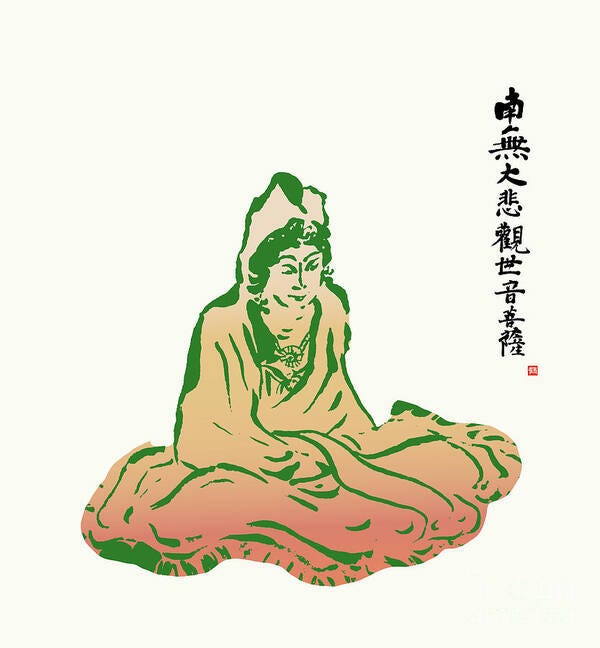
When compassion is embodied, it becomes protective. There are many stories of this. Vietnamese nuns and monks moving through war zones unharmed because they carried compassion rather than fear. Tibetan practitioners who survived years in Chinese labor camps later showed remarkable resilience and no signs of trauma. One elder Tibetan monk shared that the greatest danger he faced was not physical harm, but losing compassion for his captors. Black folks in the US who remained so creatively and wisely loving towards white supremacists that they were eventually converted to the cause of Black liberation. Protection here is not magical; it is somatic. Compassion keeps us connected to our bodies, our breath, and our humanity.
At the root of much harm is disconnection from the body and from feeling. People can only oppress, brutalize, or kill others when they are cut off from themselves. As Resmaa Menakem teaches, when trauma is not healed, we “blow our trauma through other people’s bodies.” Others can only witness such harm in silence when they are disconnected from their own pain, grief and tenderness. James Baldwin named this truth clearly: “One of the reasons people cling to their hates so stubbornly is because they sense, once hate is gone, they will be forced to deal with pain.”
When we begin to return to our bodies and allow ourselves to feel what has been unfelt, something shifts. We become more present. More human. Less reactive. Compassion becomes less of an idea and more of a lived protection.
This is why taking refuge in community matters so deeply. We are not meant to hold this alone. In community, we remember our shared humanity, our shared longing for safety and belonging, and our shared capacity to heal. Community helps us metabolize grief, anger, and fear so that they do not harden into hatred. It also reminds us that compassion does not mean tolerating harm. We can step away, seek protection, and still wish for transformation. We can say no and keep our hearts open.
So perhaps the question is not whether we can be compassionate toward those who cause harm, but how we can stay connected to ourselves while we try. Can we offer compassion without abandoning our boundaries? Can we tend to our own pain so it does not spill outward? Can we trust that refusing to react with hatred is itself a powerful act of resistance?
If you are feeling raw, weary, or unsure, know that you are not failing in your practice. This is the practice. Compassion grows slowly, especially in hard soil. May you be gentle with yourself. May you lean on community. And may your compassion, grounded in wisdom and care, be a source of protection for you and for all those you love.
For More Resources
You can read Kaira Jewel’s January newsletter on writing a Love Letter to an ICE Agent, or watch the following videos on Compassion as the Best Protection and Encountering Others Who Hold Problematic Views.
ASK THE TEACHER: This Issue’s Question and Response from Dr. Marisela Gomez
Our teachers have invited you to share your heartfelt questions arising from our BIPOC Meditation Sangha Thursday sessions or your daily practice. Below is a question that came up for one of our sangha siblings.
Question: How does one "close the windows and doors" to the wind if the wind is directly outside? For example, protestors and ICE agents on the same street as my house shouting at one another until around 9 pm at night (sometimes later). As well as waking up in the morning to find some of my neighbors gone. How do I close the windows and doors on this when necessary for my own mental health without sacrificing my own safety?
From Marisela:
Dear ones, this is an important question.
When it is raining or when it is severely cold like it’s been in many parts of the US these past days, we close the windows and door. When the wind is not blowing so strong, I open the door and take in the sunshine, look at the ice-covered plants on the fire escape and the trash bins downstairs. Then when the cold starts coming into me I close the door and retreat inside, taking refuge in the warmth of the inside. And even though the temperature inside is set at 68 degrees F, compared to 5 degrees F outside, this feels warm.
When there is ICE and those being targeted for kidnapping outside our door, we must know when to close the doors, for our own safety and the safety of others. If we keep the door open all the time and continuously engage all the sense doors (eyes, ears, mouth, nose, body, mind), we can become overwhelmed. We loose our groundedness, our center, our mindfulness. Without these protective factors, we can become easily overwhelmed and loose ourselves to whatever is impinging on our sense doors. We are more likely to respond to hate with hatred or violence with violence. These moments of taking refuge inside is not ignoring or leaving our neighbors behind. They are as important as the times we engage directly. And even though we might still hear the sounds outside after we close the door, it is still less of an impingement due to the door being closed. Just like 68 degrees F is not so hot, it is still warmer than 15 degrees F. While we may not feel fully safe inside, we are less at risk inside with the door closed that openly engaged outside.
After we take refuge inside, the house and ourselves (through our mindful steps, sleep/rest, breath, eating, listening to music, cooking etc), and we feel re-centered, re-grounded, we open the door and we are able to be in charge of what impinges on us from outside. This means we are more ready to engage with what is there from a place of greater calm and clarity.
We will not be clear-headed and clear-hearted if we stay engaged continuously. We take the time to refresh. We take breaks, we engage with things that bring us calm and joy and keeps us coming back to the breath. We remember that even in the midst of the activities right outside our door, we can renew ourselves.
If we feel like we are ignoring our neighbors, we reflect on how we show up when we have not paused. Do we show up tired and easily reactive, which could lead to more hostility? Or do we show up able to be a calm presence in a threatening situation. One can result in great violence and one can stabilize and even lessen the existing violence. Our calm presence can determine which it will be. Our awareness allows us to recognize when we need to retreat and when we are able to engage.
Closing the doors and windows to the wind means we recognize that we need time to renew ourselves. It does not mean we are abandoning our neighbors. And if ICE comes directly at us, wouldn’t it be better to stay focused and clear than be caught in an ungrounded state where we more easily respond in a way that ignites the existing fire that is already burning? Sometimes all we need is a pause, to regroup and remember what we are about and how we want to show up. This is not a weakness, it is a strength to know when we need to pause. If we can pause, we pause. If we cannot pause, we find ways in the midst of the situation to remember how we want to behave; we do not let someone else dictate how we will respond. These are difficult times that require us to acknowledge the difficulty and take time to take care so that we are always aware of how we are responding to these times.
Please feel free to contact us directly for a one-on-one opportunity to follow up on this question by reaching out to byjah6[at]gmail[dot]com and we invite you to continue submit any questions you might have on the dharma or your practice.
Inspiration for Your Practice
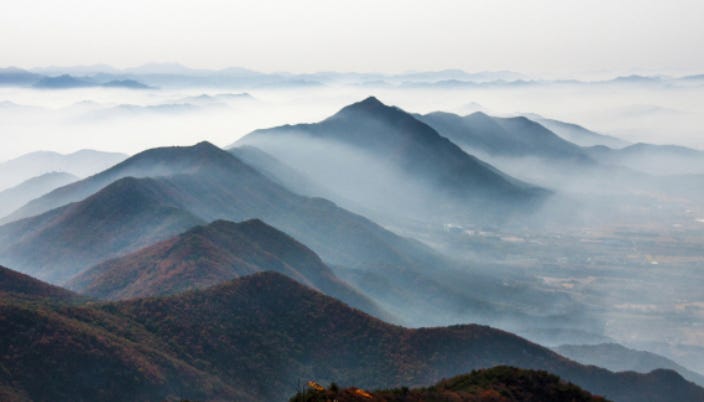
In every edition, we will share a piece of art that is inspiring our sangha to keep their practice alive. This edition, we are sending gratitude to our dear sangha sibling and BIJAH alum Grace Nam (she/we) for sharing a beautiful Korean folk song called ‘Arirang’ and how it is inspiring her practice. Below are the lyrics and a recording from Dharma teacher Hyunjung/Juliet Hwang.
아리랑 ‘Arirang’ a Korean folk song, made by the people, for the people evolved over centuries expressing the Korean experience of colonization, war, sorrow, resilience and hope. People of the Korean diaspora and in both what has been separated into north and south sing and listen to ‘Arirang’ with soul resonance as our people’s cultural ancestral story. There are thousands of regional variations.
A couple years ago, I learned ‘홀로 아리랑 Holo Arirang’ from a sangha sibling, Dharma teacher Hyunjung/Juliet Hwang. She lovingly made a recording for me. As a 2nd generation Korean diaspora child, ‘Arirang’ resets me and reminds me whose I am. Singing along, I ground and connect to my ancestors, to myself. I walk in the forest singing, “AhRiRang AhRiRang HoLo AhRiRang…” amongst the trees, river, soil, creatures who listen and breathe with me.
As Thầy reminds me, I am the continuation of my ancestors, touching our suffering and our beauty thru this centuries-old song, I feel solidity in my steps and fullness in my breath. When I feel weary and challenged, ’Holo Arirang’ sings me to stay on path, tend to, transform my suffering, and touch peace. When we are tired, we can rest. Hand in hand, we can go together.
— Grace Nam (she/her)
홀로 아리랑
아리랑 아리랑 홀로 아리랑
아리랑 고개를 넘어 가 보자
가다가 힘들면 쉬어 가더라도
손 잡고 가 보자 같이 가 보자
HoLo ARiRang
AhRiRang AhRiRang HoLo AhRiRang
AhRiRang GoGaeRul NuhMuh GaBoJa
GaDaGa HimDulMyun ShweUh GaDuhRaDo
Sohn ChaKo Ga BoJa GatChi GaBoJa
Holo Arirang
Arirang Arirang Alone Arirang
Let’s go over Arirang Hill
When we are tired, we take a rest
Hand in hand, Let’s go together
Get to Know a Sangha Member
Every newsletter, we want to take the opportunity to spotlight a sangha member. We hope that this is an opportunity to get to know each other more deeply between our BIPOC Sangha Thursday practice sessions together. If you are interested in being spotlighted or would like to nominate someone, please fill out this form. We would love the opportunity to get to know you all more and learn from each other.
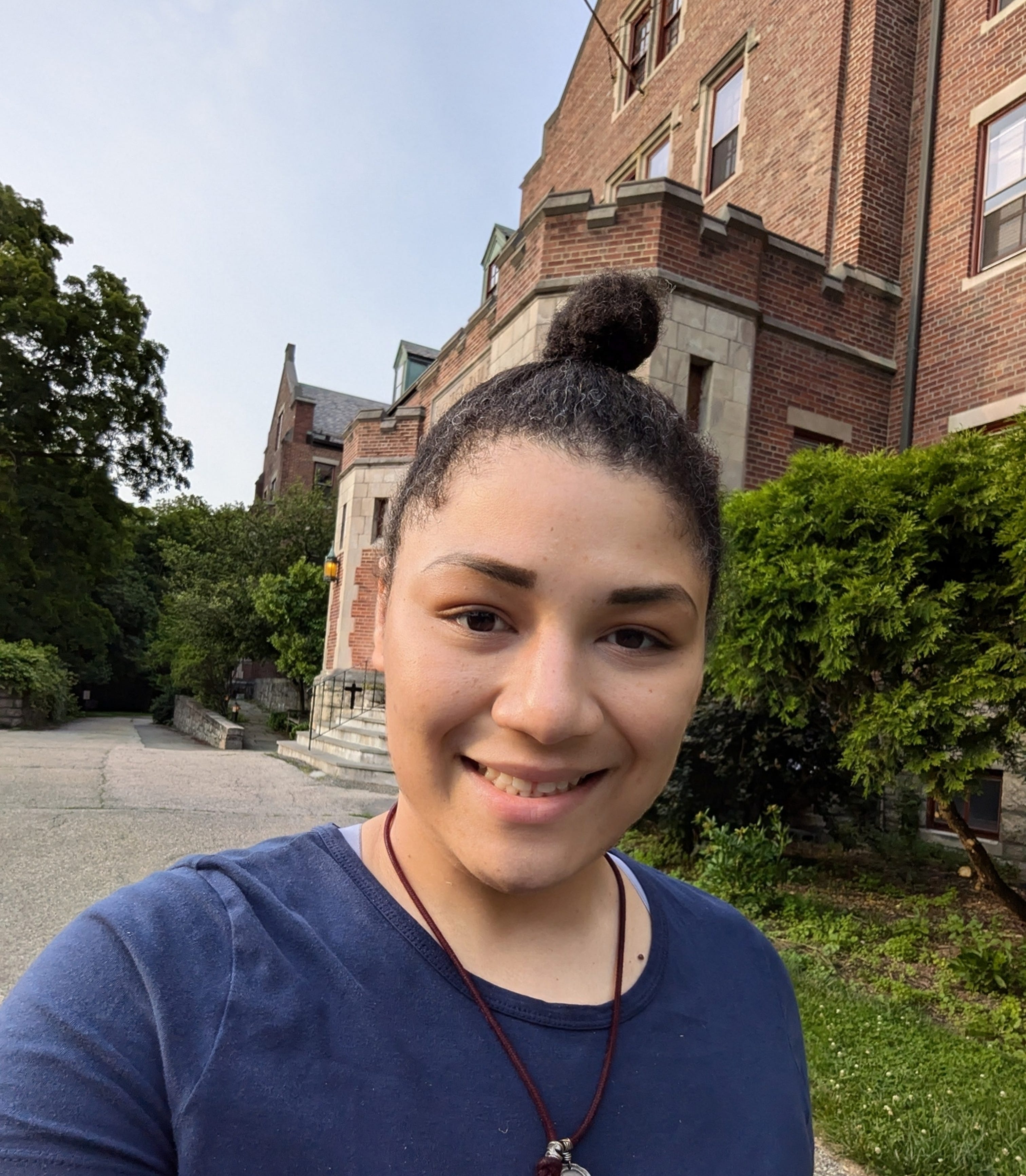
This month’s sangha spotlight is on Patty Johnson. Please enjoy connecting and getting to know her by reading more below.
Patty Johnson, she/her
Garrison BIPOC Sangha Member for 2 years
Currently in this cohort of the BIPOC Intergenerational Justice and Healing (BIJAH) Program
Currently resides in the land of the Council of the Three Fires: Ojibwe, Odawa, and Potawatomi Nations, Chicago
Ancestral homeland is Puerto Rico: It’s where my maternal grandparents were born and raised. I still have lots of family there. Perhaps also parts of Mississippi, as that is where my paternal great-grandparents are from. But I don’t know where.
What was your intention for attending the Thursday BIPOC Sangha?
I discovered the Sangha a year after I started practicing Buddhism. I had done lots of reading by various Buddhist authors and I knew the missing part of my practice was the Sangha. I researched local meditation centers in Chicago but I was very nervous about attending them. I felt like an imposter. I wasn’t sure I’d be welcomed. And I was concerned that I might be appropriating another culture’s practices.
So I broadened my Google search to include online groups. I attended one local online group and it was predominantly white. I didn’t feel like I fit in. So I searched for BIPOC groups, which instantly led me this Sangha. I immediately felt welcomed by seeing my fellow practitioners who looked like me and others that didn’t look like me but exuded such warmth. In those early days, it was the best part of my week.
How has the Thursday BIPOC Sangha impacted you?
This Sangha has helped me really take action in my practice. It taught me new ways to meditate and helped me develop a regular routine. The retreats have been wonderful breaks from the demands of life. They also seem to come when I need them most.
Before attending the 2024 Retreat, I was familiar with the 3 Doors of Liberation teaching. But Kaira Jewel, Marisela and Joe took us on such a deep dive of the material that I really was able to incorporate it into my life. It helped me realize how much I love Dharma Talks. And the subsequent Dharma Sharing helped me connect deeper to my fellow siblings.
I’ve built friendships while on retreat and we try to stay connected throughout the year. This is important because my main friend group does not practice. So it’s nice meeting people who are on a similar journey. I feel more normal.
Tell us a deep insight you have gained through your mindfulness practice and/or a teaching that has been transformative for you.
Sending Metta was a practice, led by Kaira Jewel, that I first encountered during Thursday Sangha. I loved how we started with ourselves because I had learned to be so tough on myself. But then we switched our focus to people who we were only acquainted with and then to a group of people living in an area of great need. Kaira Jewel said that we were making an impact by sending them good will and lovingkindness. Initially, this was a deviation from the Secular Buddhism I had practiced previously. So, I was unsure it would work. But Kaira Jewel seemed so happy and exuded such warmth, that I wanted to try. So I participated. Curious to learn more, I researched more and discovered parallels between many spiritual groups. It all felt like it was pointing to something.
Later, Kaira Jewel held another teaching where she talked about faith. Coming from Catholic and Christian upbringings, I always hated the concept of faith. But she gave me a new definition to work with. She said faith was founded on a knowing of the truth and the validity of these teachings because we practice them and we knew they work. And that is something that I experienced. That was the reason I kept coming back to Sangha.
What is an inspiration for your current practice?


I named the tree Beatrice after a Black French woman, whom I met while in college. She was 10 years older than me and so wise! I’ve been practicing with this tree for 7 years, since we purchased our home. I’ve picked up my practice from various sources, but I’ve heard that trees like our company and for you to speak to them and admire their beauty. So, when I come home I either gaze at her or stop and spend a few moments admiring the texture of her trunk or the face that’s hidden among the swirls and knobs. I’ve found it helpful to stand underneath her canopy and view her branch structure. I feel like the intricacy of the latticework of the branches are a symbolic message that my subconscious wants to explore. We dress her up in the spring with a fairy door and other objects to honor nature spirits. When it’s too cold to go outside I admire her from my windows. She’s helped me learn not to suffer during winter because the leaves are gone because there is so much beauty in the bare branches.
My tree practice extends beyond my home. I watch them from my office window on the South side of Chicago. Seeing the tall trees filled with nests in rural Springfield, IL saved me from a stressful business trip. And I’ve taught my family to stop and admire a tree while we walk to the park or drive by a beauty in our neighborhood. Writing this makes me want to happy cry! :)
Is there anything else you would like for the sangha and/or teachers to know about you or that you would like to share?


People often see me as very energetic in my participation. Once I started attending Sangha and retreats, I knew that I was on the right path. But this journey started decades ago in communities that I felt isolated in. I attended Church-based youth groups but I never believed the teachings. They didn’t sit right with me because they were cruel and restrictive. I assumed everyone felt the same way until I realized I was alone.
Then at age 7, my father was murdered. That started decades of grief that only transformed with the death of my sister at age 27. She died from complications from Lupus. There are additional cases of violent death that I won’t name, but they’ve caused me to grieve the majority of my life.
Yet that is juxtaposed against all the wonderful privileges I have, like my caring and generous mother, my supportive long-term partner, and my sweet 7-year-old daughter Luna.
Without the practice and the Sangha, I wouldn’t be able to enjoy all the good that’s in my life. I know I’m in safe hands with our teachers and our Sangha siblings. I only hope that I can give back to others all the supportive and loving space I’ve been given.
Upcoming Events and Staying Connected
Save the Date for the In-Person BIPOC Retreat at Garrison Institute on June 20-June 24. Link to register to come!
Wisdom for Meeting the Storm Together: Holding and Transforming Our Fear with Compassion and Collective Care
A Retreat for BIPOC With Dharma Teachers Dr. Marisela Gomez, Kaira Jewel Lingo, Joe Reilly and assisted by Judy Nakatomi.
Apply for the 5 Mindfulness Trainings on April 22, 2026
We’re opening applications for those interested in receiving the Five Mindfulness Trainings. This offering includes a formal transmission, and we ask that you only apply if you are able to attend the full transmission on Thursday, April 22 at 12P ET. If you feel called to deepen your practice and commit to this next step on the path, we warmly invite you to apply.
Minneapolis Resources
Our BIPOC Sangha is gathering resources connected to Minneapolis—organizers, mutual aid efforts, community groups, healers, and spaces offering care and resistance on the ground. If you know of trusted organizations, actions, fundraisers, or local efforts that need amplification, please add any them so our community can come together for our siblings in Minneapolis. This is one small way we practice interbeing: listening deeply, resourcing wisely, and showing up together in solidarity.
Practice Every Thursday with the BIPOC Meditation Sangha
with Dr. Marisela Gomez and Kaira Jewel Lingo
The Black, Indigenous and People of Color (BIPOC) Sangha is a weekly gathering of self-identified BIPOC practitioners that provides a place to meditate and explore contemplative practices. This sangha cultivates an environment that welcomes diverse voices and builds community. Please review our community rules.
More Ways to Connect & Join
This Weekly Reflection group meets every Friday at 1:00 p.m. ET. For more information, please contact Sung E at jsbai2007[at]gmail[dot].com.
Learn More about our Beloved Teachers
Please Donate & Support our BIPOC Sangha
And deep bows and gratitude to Kim Thai, Monique Francis, Brian Reid for their contributions to this newsletter and to the sangha.
Dear Garrisson Institute. I have been trying to join the sangha for a very long time and my zoom registration is never approved. Anything I can do? I have emailed a few times…
🙏🏽✨️